McKay United Win CICA Lift of the Year Award

McKay United Win CICA Lift of the Year Award
TA 2025 Standpipe Replacement Project

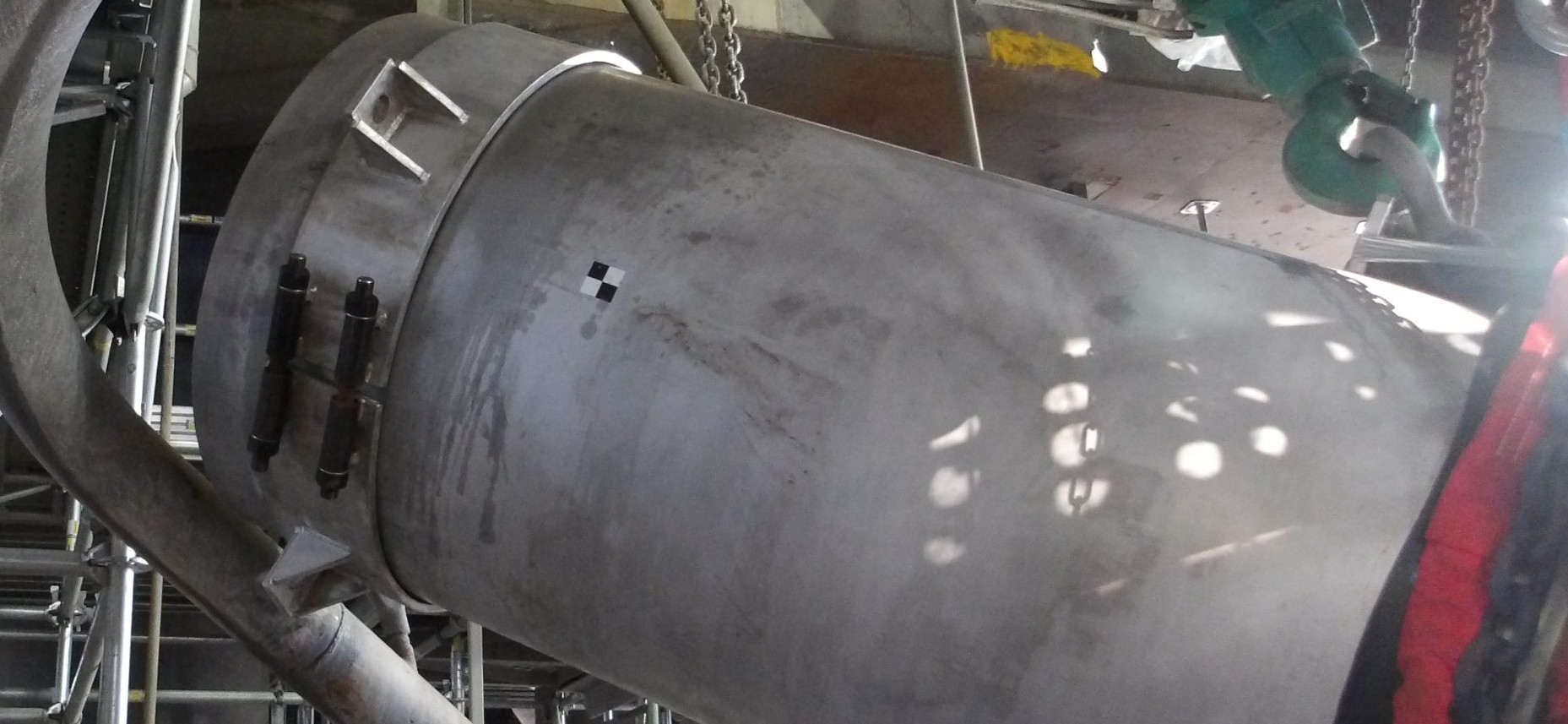
The project involved the removal and replacement of the R5301 Regenerator Standpipe within the Residue Catalytic Cracking Unit during VIVA Energy’s 2025 shutdown at the Geelong Refinery.

The standpipe had an estimated weight of 13,798 kg, with a 10% contingency applied, resulting in a total design load of approximately 15,180 kg.

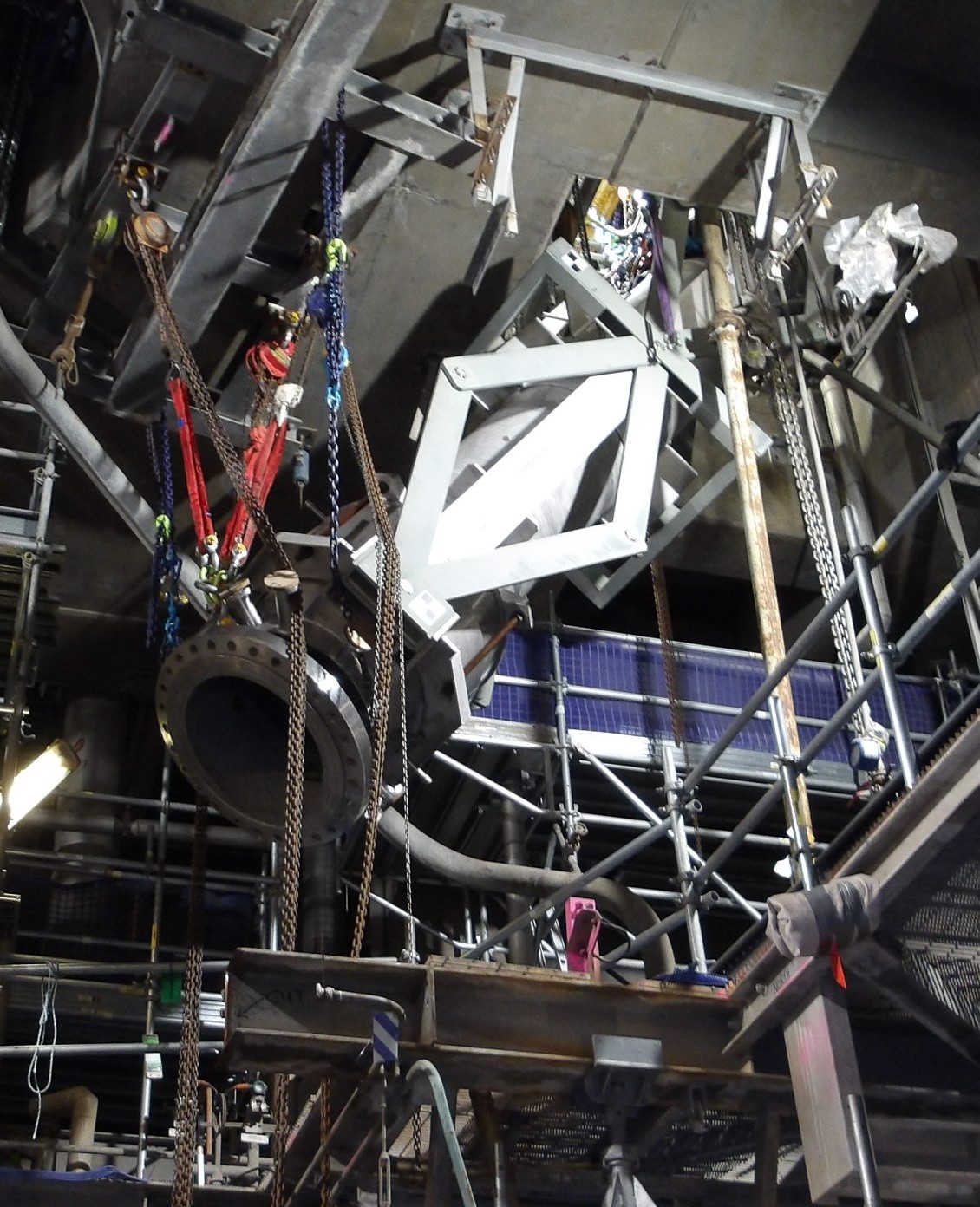
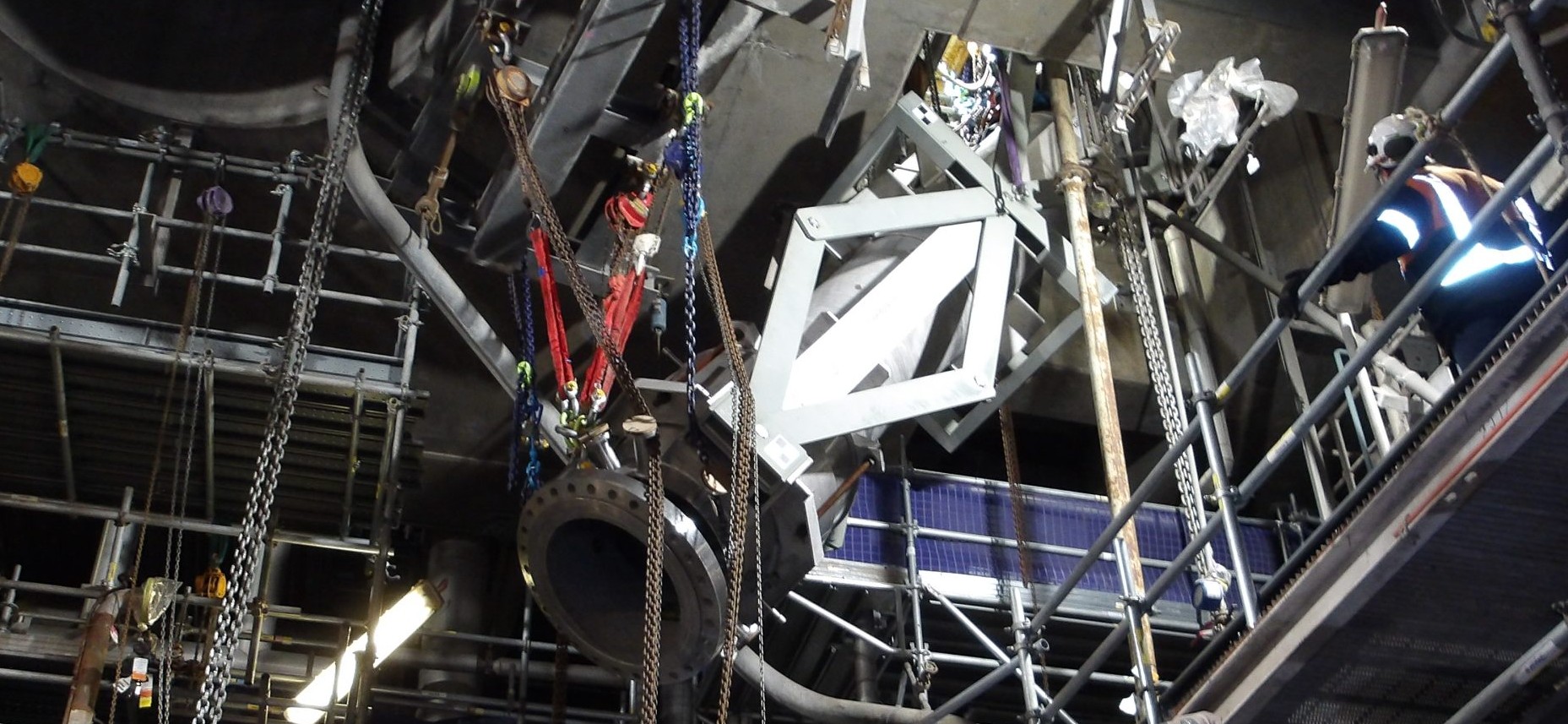
The standpipe was located deep within the refinery structure and could not be extracted using a conventional crane lift. Instead, a complex staged lifting and load-transfer process was developed to safely remove the component and install its replacement.

Sector

Energy

Client

Viva Energy Refining Pty Ltd

Location

Refinery Rd, Corio VIC 3214

Completion

October 2025

Digital Planning and Modelling

A detailed 3D model of the refinery structure was developed using site scan data. This allowed the engineering team to:

verify clearances; position the Franna crane; locate lifting points; analyse load transfers; model every lift stage before execution began. engineered lifting points were installed; the standpipe was fully supported using the overhead lifting system; lifting appliances were tensioned and verified. Following water-cutting operations the standpipe was progressively lowered through the structure; the air hoist and chain blocks worked together; load transfers occurred at predetermined stages; hold points were conducted before every significant load transfer or rigging change. Once the lower end of the standpipe became accessible: the Franna AT40-2 was connected; the standpipe was rotated from vertical to horizontal; loads were carefully transferred between the hoist system, chain blocks and crane; the standpipe was then transferred onto the monorail trolley system and moved clear of the structure. The replacement standpipe was installed using the same engineered sequence in reverse order.

Why It Stands Out

Most standpipe replacements rely on direct crane access.

This project required a completely different approach because the standpipe was buried within refinery infrastructure and inaccessible to conventional lifting methods. McKay United developed an innovative staged lifting solution combining engineered lifting points, air hoists, chain blocks, an existing monorail system and a Franna AT40-2 crane.

Challenges

This project was primarily an engineering and rigging challenge rather than a heavy-load challenge.

The key difficulties included:

• The standpipe was located within a highly congested refinery structure surrounded by pipework, structural steel, platforms, scaffolding and operating equipment.

• There was no direct crane access to the installed standpipe.

• The standpipe had to be:

  • Supported

  • Lowered

  • Rotated

  • Transferred between lifting systems

  • Finally extracted through the structure before replacement

• The load path changed continuously throughout the operation, creating varying loads on lifting points, chain blocks, hoists and the crane.

• Suitable lifting points did not exist throughout the structure, requiring new engineered lifting points to be designed and installed.

• The work was performed at multiple elevations, creating significant working-at-height and dropped-object risks.


Technical Details

Load

• R5301 Regenerator Standpipe

• Actual estimated weight: 13,798 kg

• Design load with contingency: 15,180 kg

Lifting Equipment

The lifting arrangement included:

• 16-tonne air hoist

• 15-tonne chain block

• Multiple 5-tonne chain blocks

• Existing refinery monorail system

• Franna AT40-2 crane

• Engineered temporary lifting points

• Safety chains

• Purpose-designed lifting lugs

Engineered Components

Custom-designed lifting lugs were manufactured specifically for the project:

• Working Load Limit: 15.2 tonnes

• Proof-load tested to 249.25 kN

The monorail, temporary lifting points and supporting steelwork were all independently verified by engineering assessment before lifting commenced.

Engineering Verification

The lifting arrangement also underwent:

• Detailed lift study development

• 3D modelling using site scans

• Independent third-party engineering review

• Compliance assessment against AS 2550 requirements

Engineering Controls

• Pre-lift structural analysis

• Custom rigging design

• Engineered cut sequence

• Precision area scanning to optimise crane location and minimise lifting radius

Execution highlights

Digital Planning and Modelling

A detailed 3D model of the refinery structure was developed using site scan data. This allowed the engineering team to: verify clearances; position the Franna crane; locate lifting points; analyse load transfers; model every lift stage before execution began.

Controlled Lowering Process

Following water-cutting operations: the standpipe was progressively lowered through the structure; the air hoist and chain blocks worked together; load transfers occurred at predetermined stages; hold points were conducted before every significant load transfer or rigging change.

Engineered Support System

Before any cutting commenced: engineered lifting points were installed; the standpipe was fully supported using the overhead lifting system; lifting appliances were tensioned and verified.

Rotation and Crane Transfer

Once the lower end of the standpipe became accessible: the Franna AT40-2 was connected; the standpipe was rotated from vertical to horizontal; loads were carefully transferred between the hoist system, chain blocks and crane; the standpipe was then transferred onto the monorail trolley system and moved clear of the structure.
Energy

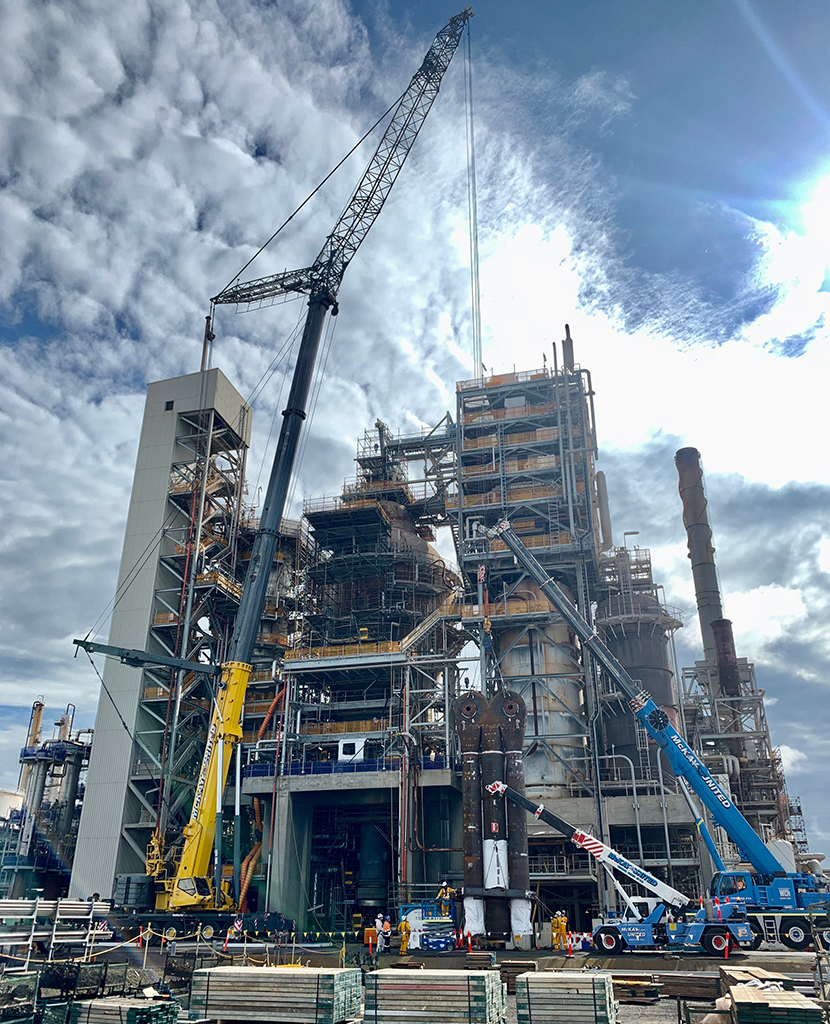
2025 Cracker Shutdown — Viva Energy Geelong Refinery 

In 2025, Viva Energy undertook a major planned shutdown at the Geelong Refinery focused on the Residual Catalytic Cracking Unit (RCCU), commonly…